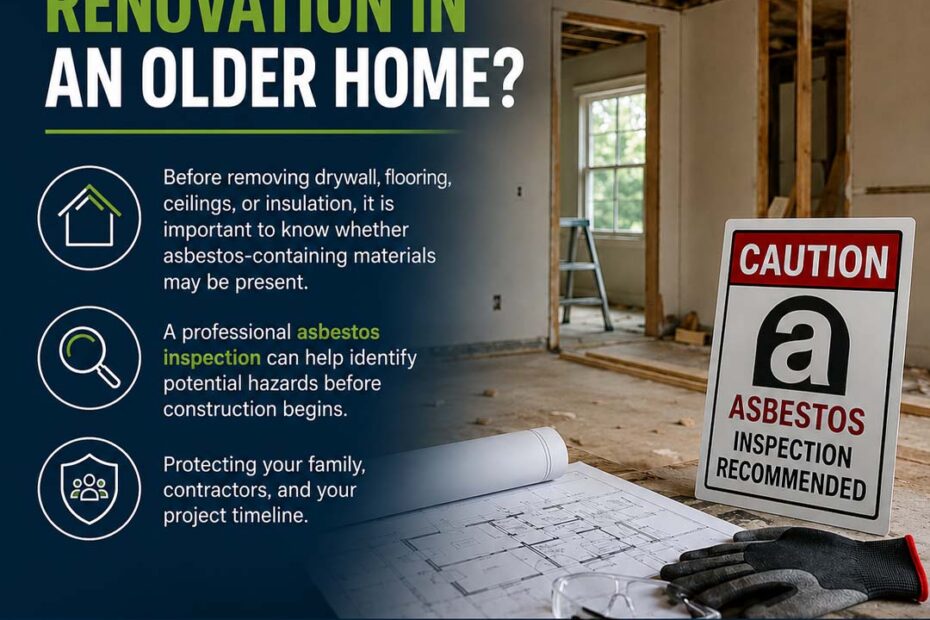
Planning a renovation or demolition project in an older home or commercial building can be exciting, but it also comes with important responsibilities. One of the most critical is determining whether asbestos-containing materials may be present before any work begins.
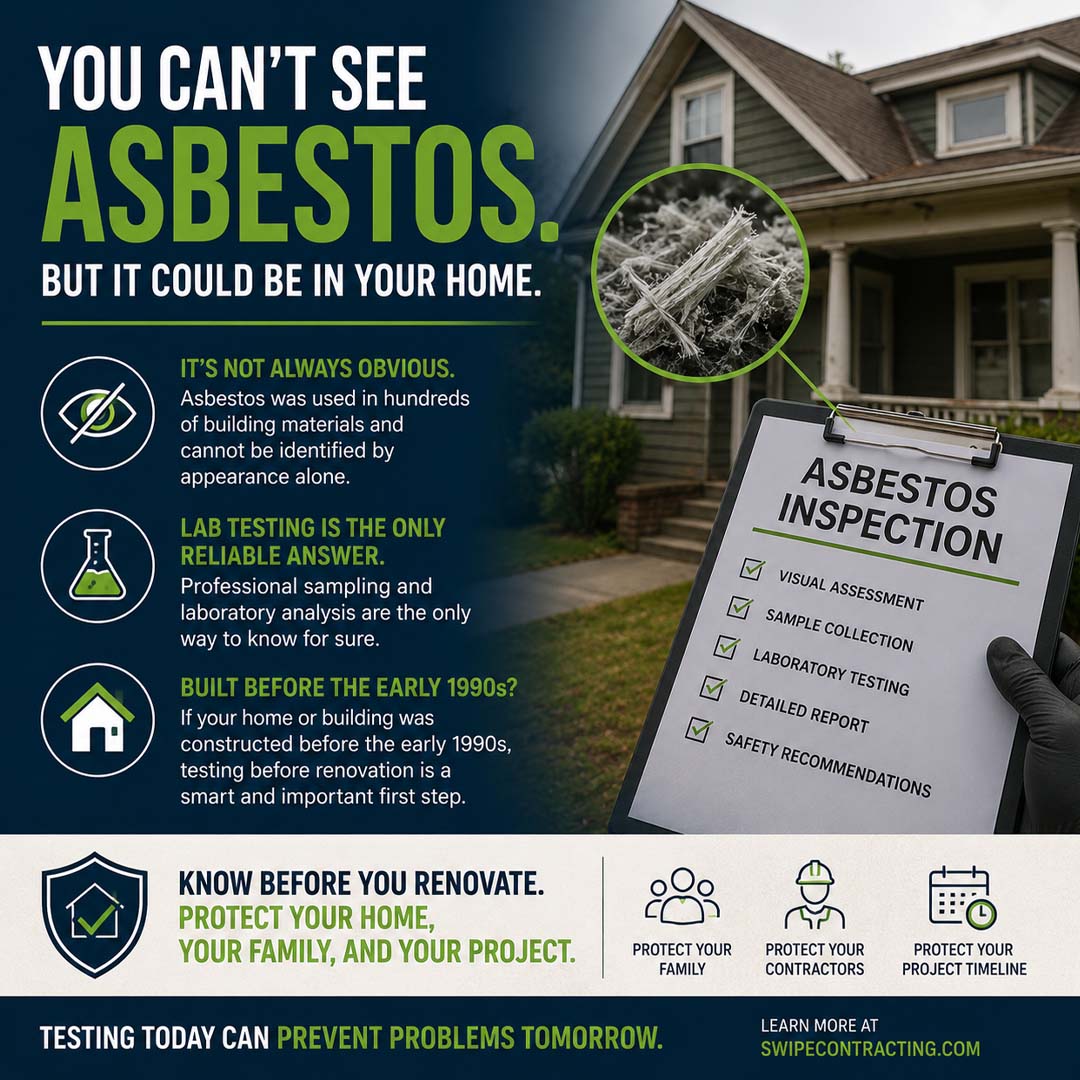
Many property owners assume they would recognize asbestos if they saw it. Unfortunately, asbestos cannot be identified by appearance alone. It was used in hundreds of building products throughout much of the twentieth century, and the only reliable way to confirm its presence is through professional inspection and laboratory testing.
Understanding how an asbestos inspection works can help property owners make informed decisions, protect everyone involved in a project, and avoid costly delays once construction begins.
Why Asbestos Inspections Are Important
Asbestos becomes hazardous when materials containing asbestos are disturbed, damaged, or begin to deteriorate. Cutting, drilling, sanding, or demolishing these materials can release microscopic fibres into the air.
Once airborne, asbestos fibres can remain suspended for long periods and may be inhaled without anyone realizing they are present.
A professional inspection helps determine:
- Whether asbestos-containing materials are present
- Which materials pose a potential risk
- Whether testing or remediation is required before work begins
- How renovation or demolition work can proceed safely
For many renovation projects, identifying asbestos before construction starts can prevent expensive work stoppages and unexpected remediation costs.
Which Buildings Are Most Likely to Contain Asbestos?
Although asbestos use declined significantly after the 1980s, many older buildings still contain asbestos products.
Materials commonly associated with asbestos include:
- Popcorn ceilings
- Vinyl floor tiles
- Sheet flooring adhesives
- Pipe insulation
- Boiler insulation
- Vermiculite attic insulation
- Cement siding
- Roofing materials
- Drywall joint compound
- Ceiling tiles
- Textured wall coatings
Age alone does not confirm the presence of asbestos, but buildings constructed before the early 1990s should be evaluated carefully before renovation or demolition.
Step 1: The Initial Property Assessment
Every inspection begins with a visual assessment of the property.
An environmental professional will review:
- The age of the building
- Renovation history
- Areas where work is planned
- Building materials that may contain asbestos
- Visible damage or deterioration
This helps determine where sampling should occur and whether immediate safety concerns exist.
Step 2: Identifying Suspect Materials
The inspector identifies materials that have historically contained asbestos.
Because asbestos cannot be identified visually, materials are considered “suspect” until laboratory analysis confirms otherwise.
The goal is to locate all materials that could be affected by the planned renovation or demolition.
Step 3: Safe Sample Collection
Small samples are collected from suspect materials using controlled procedures designed to minimize fibre release.
Depending on the project, inspectors may:
- Wear appropriate personal protective equipment
- Isolate the sampling area
- Use specialized tools
- Carefully seal each sample for transport
Only a small portion of each material is typically required for testing.
Step 4: Laboratory Analysis
Collected samples are submitted to an accredited laboratory for analysis.
The laboratory determines:
- Whether asbestos is present
- The type of asbestos identified
- The percentage of asbestos within the material
This information is essential for determining the next steps.
Step 5: Inspection Report
Following laboratory analysis, the property owner receives a detailed report.
The report typically includes:
- Sample locations
- Laboratory findings
- Materials containing asbestos
- Risk assessment
- Recommendations for management or removal
- Guidance for planned renovation work
This documentation is valuable for contractors, insurance providers, and future property records.
What Happens If Asbestos Is Found?
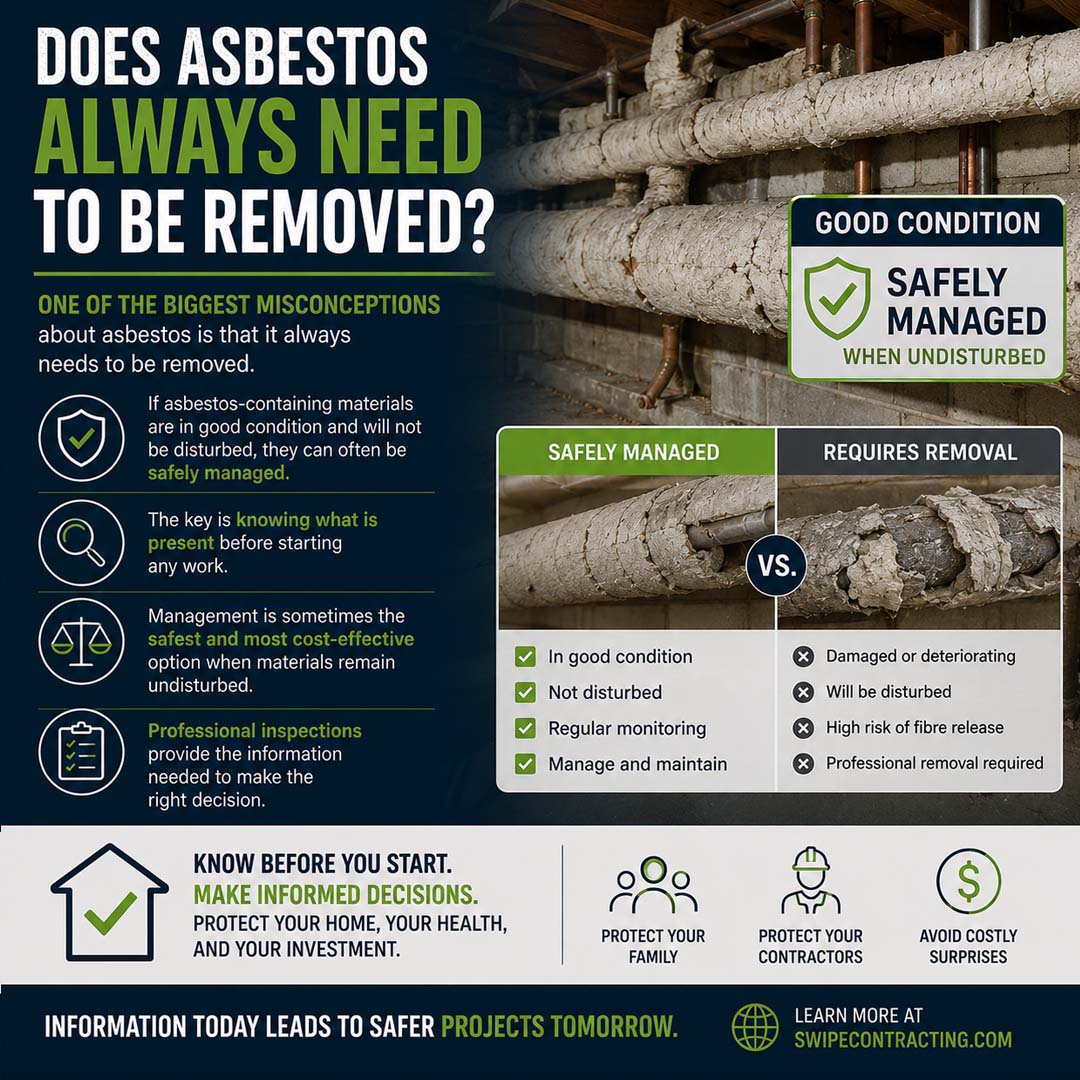
Finding asbestos does not automatically mean it must be removed immediately.
The appropriate response depends on several factors, including:
- The condition of the material
- Whether it will be disturbed
- The type of renovation planned
- Applicable health and safety regulations
In some cases, asbestos materials that remain undisturbed may be safely managed.
If renovation or demolition will disturb the material, professional asbestos abatement is generally required before work continues.
Why Homeowners Should Never Remove Suspected Asbestos
Because asbestos fibres are invisible to the naked eye, disturbing suspect materials without proper controls can create significant health risks.
DIY removal often results in:
- Airborne fibre contamination
- Cross contamination throughout the property
- Increased cleanup costs
- Potential exposure for occupants and contractors
Professional asbestos contractors use specialized containment systems, negative air equipment, and disposal procedures designed to safely manage hazardous materials.
When Should You Schedule an Asbestos Inspection?
An inspection is recommended whenever:
- Planning renovations in an older home
- Removing flooring or ceilings
- Completing demolition work
- Purchasing an older commercial property
- Water or fire damage has affected suspect materials
- A home inspection identifies possible asbestos-containing products
Scheduling an inspection before work begins is almost always faster and less expensive than discovering asbestos after construction has already started.
How Swipe Contracting Can Help
Swipe Contracting provides professional asbestos inspections, environmental assessments, and remediation services for residential, commercial, and institutional properties throughout British Columbia.
Their experienced team helps property owners identify potential hazards, coordinate laboratory testing, explain results clearly, and recommend the safest path forward for each project.
Whether you are planning a renovation, purchasing an older property, or preparing for demolition, professional guidance helps ensure the work can proceed safely and with confidence.
Asbestos inspections are not about creating unnecessary concern.
They are about making informed decisions before disturbing materials that could affect health and safety.
Knowing what is present inside a building allows homeowners, contractors, and property managers to plan projects responsibly while protecting workers, occupants, and future property value.
If your home or building was constructed before the early 1990s and renovation work is planned, an asbestos inspection is one of the smartest first steps you can take.
Frequently Asked Questions
How do I know if my home contains asbestos?
You cannot determine whether a material contains asbestos simply by looking at it. Laboratory testing is the only reliable method of identification.
Is asbestos dangerous if it is left alone?
In many cases, asbestos-containing materials that remain intact and undisturbed do not present an immediate risk. The concern arises when those materials are damaged or disturbed.
How long does an asbestos inspection take?
Most residential inspections can be completed within a few hours, depending on the size of the property and the number of samples required.
Can I renovate before testing for asbestos?
If your home was built before the early 1990s, testing before renovation is strongly recommended. Disturbing asbestos-containing materials without knowing they are present can create significant health and legal concerns.
What happens after the laboratory results are received?
Your inspector will explain the findings and recommend whether the materials can remain in place, should be monitored, or require professional removal before work proceeds.
Is asbestos testing expensive?
Testing costs vary depending on the number of samples required and the size of the project. In most cases, testing is a relatively small investment compared to the cost of unexpected delays or contamination during construction.